1. Why System Type Matters
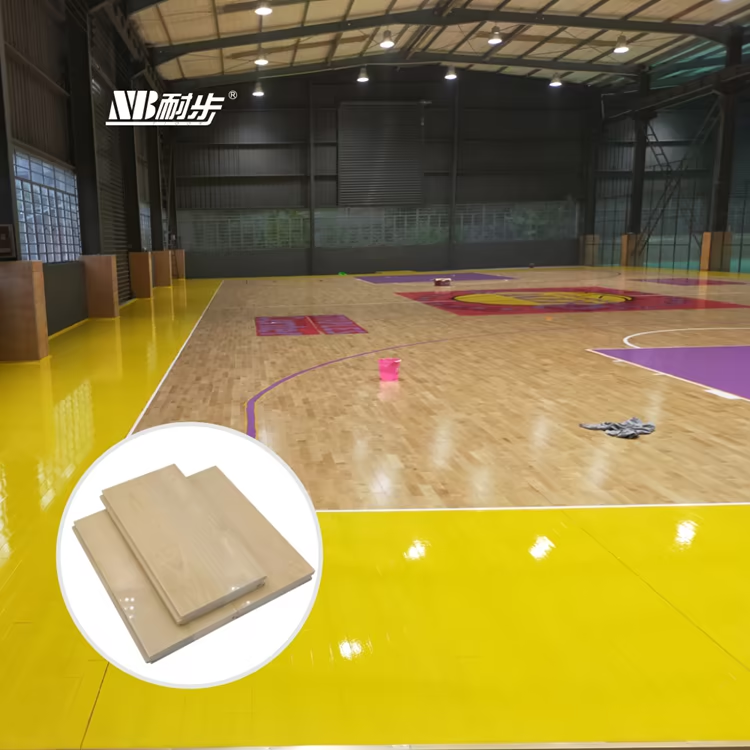
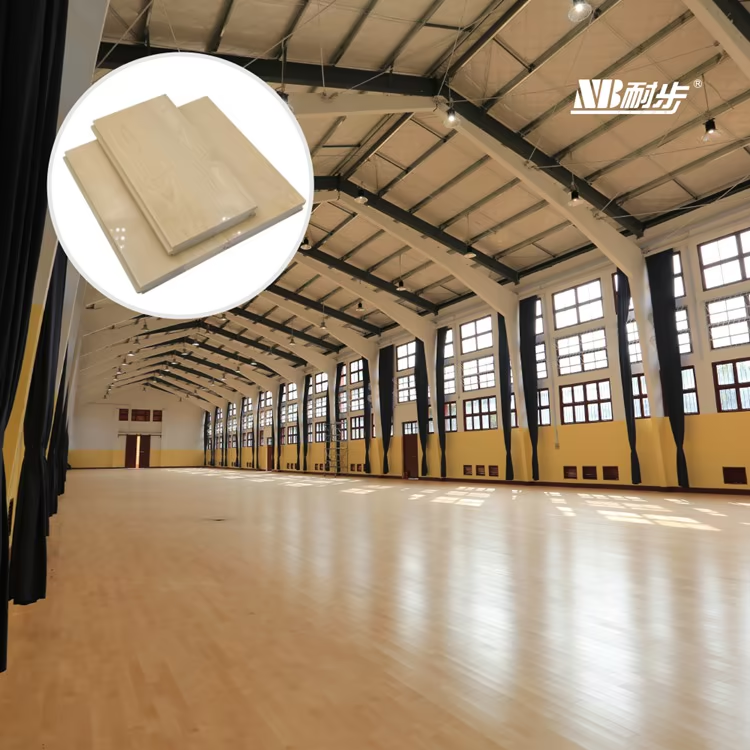
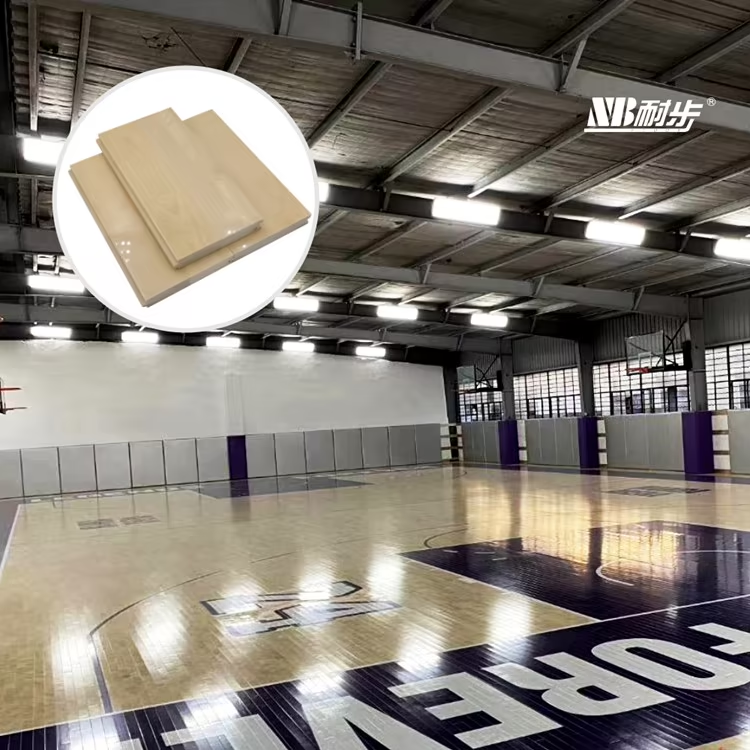
Choosing between a portable and a fixed wooden sports floor is not mainly a product decision — it is a building decision. The same hardwood surface is available in both, so the real question is how the hall is used across the year.
Portable systems exist for buildings that share their floor: exams, exhibitions, community events and school assemblies that take the hall for part of the week. Fixed systems exist for buildings that belong to sport, where the court stays down and the specification is set once.
2. Portable Systems: Built to Come Up Again
The H500 and H600 are modular hardwood courts assembled on site from panels that lock together, sitting on a flat, dry substrate without permanent fixing. When the hall is needed for something else, the floor is taken up, stored and re-laid in the same layout — the panels, edge pieces and markings are produced as one set.
The H600 pairs a 22mm birch top board with the same snake-spring build-up for venues that set up and take down more often; the H500 uses a 20mm maple top board. Both are FIBA Approved Equipment (Level 1).
Installation training for your own team is available, so the floor can be handled in-house between events.
3. Fixed Systems: Specified Once, Maintained for Years
The H3035 range covers permanent installations. The build-up is laid over the prepared substrate and stays there — which is what most clubs and school sports halls actually need. The H3035 is specified around shock absorption; the H3035K adds load capacity for venues that move equipment across the court; the H3035M is the competition specification, with documentation available for tenders.
Because a fixed floor is permanent, the decisions happen once: substrate and moisture, build-up height against doors and thresholds, markings, and the maintenance regime the venue can realistically keep to.
4. Side by Side
| Portable (H500 / H600) | Fixed (H3035 range) | |
|---|---|---|
| Installation | Assembled on site, no permanent fixing | Fixed over a prepared substrate |
| Take-down | Designed for repeated removal | Permanent |
| Best for | Shared halls, events, travelling courts | Clubs, schools, competition venues |
| Deciding factor | How often the floor comes up | Substrate and level of play |
5. The Practical Test
Ask one question: how many times a year would the floor actually be taken up? If the hall is used for exams, exhibitions or community functions, a portable floor earns its cost back by letting the building do two jobs. If the honest answer is once or twice, a fixed system is usually the better buy — because nothing is spent on portability.
Planning a sports floor project? Send the court dimensions, sports and destination port — we reply with a specification and a price within 48 hours.
Request a Quote